The Silent Hazard: Why Routine Kitchen Exhaust Cleaning is Non-Negotiable
In the fast-paced environment of a commercial kitchen, the focus is naturally on the food leaving the line and the guests in the dining room. But hovering just above the cooks is a complex mechanical system that requires rigorous, specialized maintenance: the kitchen exhaust hood and ductwork.
The Physics of Grease Vapor
When food is cooked at high temperatures, especially using fryers, charbroilers, or wok stations, grease vaporizes and is drawn up by the exhaust fan. While filters catch the particulate matter, the microscopic vapor travels through the ductwork, cooling and solidifying against the metal walls. Over months, this creates a highly flammable, hydrocarbon-rich fuel source.
"Cooking equipment is the leading cause of fires in eating and drinking establishments, accounting for 61% of all reported structure fires." - National Fire Protection Association
Why Standard Cleaning Isn't Enough
Many budget cleaning services perform what the industry calls a "hoodshine"—they clean the stainless steel hood canopy so it looks great to the chef, but they ignore the inaccessible horizontal ductwork hidden in the ceiling leading to the roof fan. If a grease fire starts on the stove, the flames will rip through the uncleaned ductwork, bypassing the fire suppression system and igniting the roof.
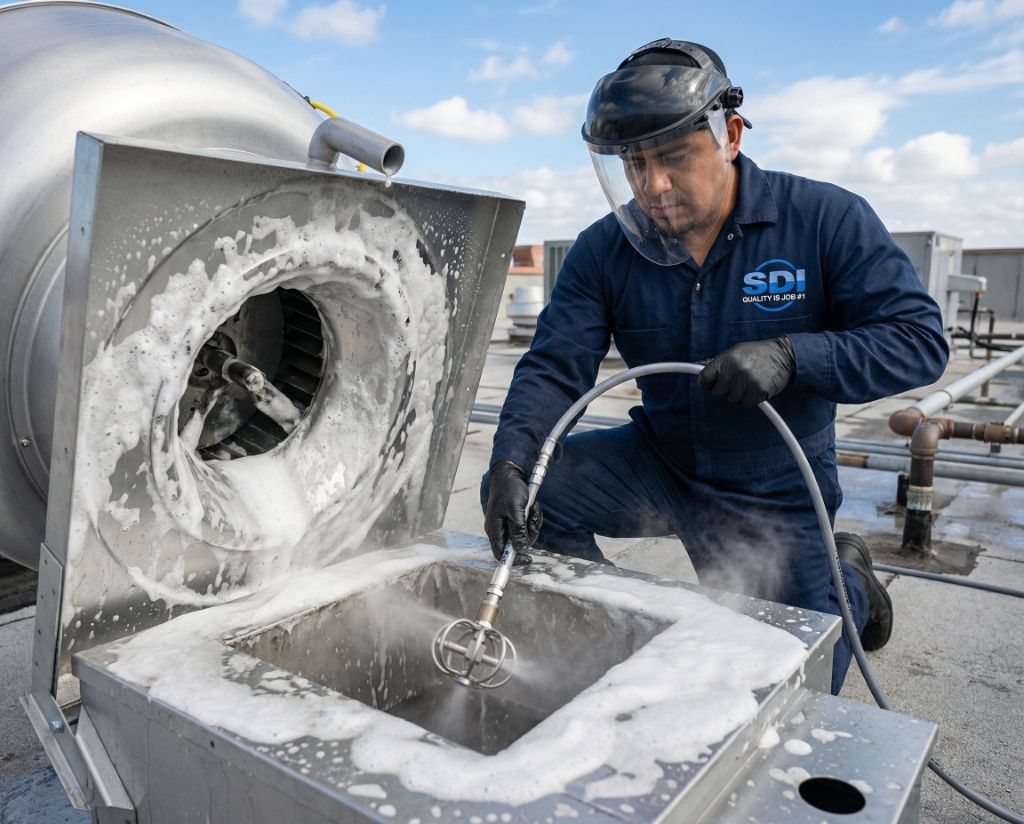
At SDI Quality, our IKECA Master Certified technicians use high-temperature steam and caustic chemical foam to strip the system down to bare metal, from the hood layout all the way to the rooftop fan. This full-system restorative clean is the only way to achieve true NFPA 96 compliance and protect your facility. Don't risk your kitchen's future on a surface-level shine.
Ready to Secure Your Facility?
Protect your restaurant, your staff, and your patrons. Learn more about our comprehensive Kitchen Exhaust Cleaning services.